
Zygomatic Dental Implants: The Complete Guide
Zygomatic implants are extra-long dental implants anchored in the cheekbone instead of the upper jaw, used to support a fixed set of teeth when the jawbone has shrunk too much for standard implants — usually without a bone graft. If you’ve been told you don’t have enough bone for dental implants, this guide explains who they help, what they cost in the UK and abroad, and the honest risks.
- Anchored in the cheekbone, not the shrinking jaw
- Often no bone graft, so no months of waiting
- Every claim sourced, every gap flagged
 Medically reviewed by Uzm. Dt. Oğuzhan SunarSpecialist PeriodontistUpdated August 2026 · 14 min read4 of 5 statements clinically confirmedPublished by Natural Clinic · how this guide is funded
One surgery
2–4 hoursindicative
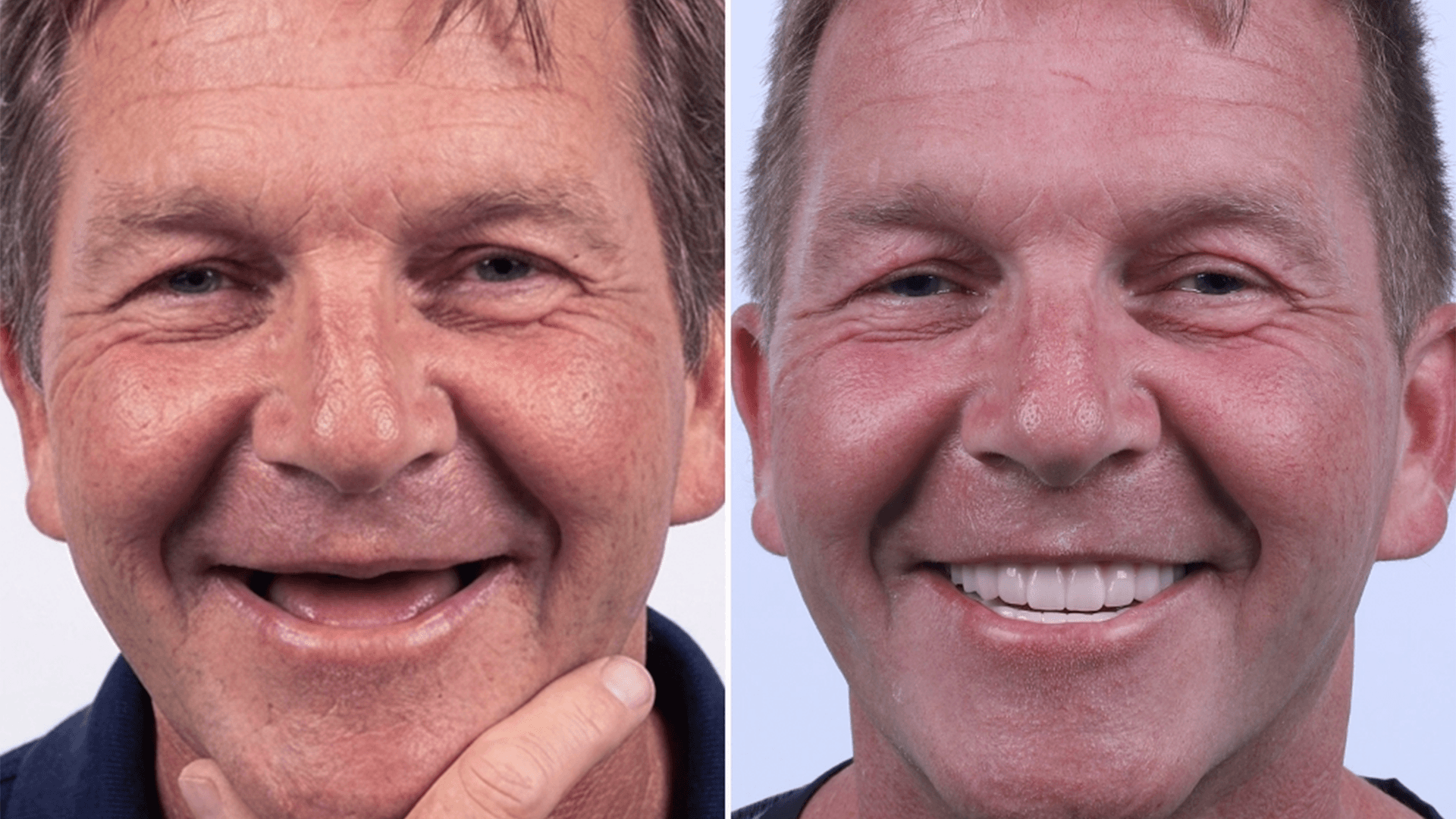
Illustrative photography — not a patient of any clinic.
One surgery
2–4 hours
indicative
Fixed provisional teeth
24–72 hrs
usually
Bone graft
Often not needed
Turkey package
from £5,500
indicative
What are zygomatic implants?
Zygomatic implants are extra-long dental implants that anchor into the cheekbone (the zygomatic bone) instead of the upper jaw. Because the cheekbone is dense and doesn’t shrink after tooth loss, these implants can support a full set of fixed teeth even when the jawbone has severely deteriorated — usually without bone grafting.
You will see the same treatment called several different things: zygoma implants, zygomatic arch implants, or simply “zygo implants”. They all mean this procedure. The anchorage is in the solid body of the zygomatic bone rather than the slender arch you can feel at the side of your face, so “zygomatic arch implant” is a common shorthand rather than a separate operation.
They were developed in the late 1980s by Professor Per-Ingvar Brånemark — the pioneer of modern dental implants — originally for patients who had lost jaw structure to cancer surgery or trauma. Today they are an established option for people with advanced bone loss. [1]
Who needs zygomatic implants?
Zygomatic implants are designed for people whose upper jaw can no longer hold standard implants. You may be a candidate if:
- You’ve been told you have "too much bone loss" or "not enough bone" for implants
- You’ve worn full or partial dentures for years and your gums have flattened
- You’ve had implants or bone grafts that failed
- You’ve lost most or all of your upper teeth
- You want fixed teeth without months of grafting and healing first
- Gum disease has destroyed the bone supporting your upper teeth
Long-term denture wearers are the most common candidates. Every year a denture rests on the gums, the jawbone underneath shrinks a little more — which is exactly why many people are eventually refused standard implants.
Age itself is rarely the deciding factor; overall health matters more. Well-controlled diabetes is not in itself a barrier, but diabetes that is not under control has to be assessed by the surgeon before implant surgery. Heavy smoking also raises the risk, and is better raised openly than left for the clinic to find.
Only a CT (CBCT) scan can confirm whether zygomatic implants are right for you. No reputable clinic will promise suitability before seeing one. If your bone loss is moderate rather than severe, other routes may work too — see all options for implants with bone loss.
Zygomatic implants vs bone grafting vs All-on-4
Three main paths can lead to fixed upper teeth when bone is limited. The right one depends on how much bone you still have.
Last updated: July 2026| Zygomatic implants | Bone grafting + implants | All-on-4 (standard) | |
|---|---|---|---|
| Best for | Severe upper-jaw bone loss | Moderate, localised bone loss | Mild-to-moderate bone loss |
| Bone graft needed | No | Yes | Usually no |
| Fixed teeth timeline | Usually within 24–72 hours | 6–12+ months | Usually within 24–72 hours |
| Number of surgeries | 1 | 2–3 | 1 |
| Typical UK cost (full arch) | £15,000–£20,000 | £14,000–£22,000+ | £10,000–£16,000 |
Cost ranges are indicative, not quotes — see the full cost guide.
Bone grafting remains the right choice for many patients — it rebuilds bone for standard implants and has decades of evidence behind it. Its trade-off is time: months of healing before implants can even be placed. Zygomatic implants skip that stage by using bone that never shrinks.
Types of zygomatic implant treatment
Single zygomatic (hybrid)
Best for: some front jawbone remains
- Configuration
- One zygomatic implant per side plus 2–4 standard implants at the front
- How common
- The most frequent set-up
Quad zygoma
Best for: almost no usable bone at all
- Configuration
- Four zygomatic implants supporting the entire arch
- Read more
- Quad zygoma guide
Zygomatic + pterygoid
Best for: avoiding sinus lifts at the back
- Configuration
- Pterygoid implants anchor behind the upper jaw and replace rear implants
- Read more
- Pterygoid implants
The procedure: step by step
- 1
Remote assessment
You share a panoramic X-ray or CBCT scan; a surgeon confirms preliminary suitability and you receive a written plan and quote.
- 2
In-person consultation & 3D planning
On-site CBCT confirms the plan. Implant positions are planned digitally before surgery.
- 3
Surgery (2–4 hours)
Performed under local anaesthetic, sedation or general anaesthesia — decided by you and your surgeon together, based on your health and the case.
- 4
Fixed provisional teeth within 24–72 hours
A fixed temporary bridge is usually attached before you go home — the "teeth in a day" approach.
- 5
Healing period (4–6 months)
Implants fuse with the bone while you wear fixed provisional teeth. Follow-up can happen remotely.
- 6
Final teeth
Your permanent bridge — typically monolithic zirconia — is made and fitted.
Most patients describe the first days after surgery as mildly sore and slightly swollen rather than acutely painful, and standard pain relief usually controls it comfortably. Both the soreness and the swelling normally settle within a few days — though experiences vary from person to person.
Full detail: the procedure step by step.
Recovery & aftercare
First 48 hours
Week 1
Weeks 2–4
Months 4–6
You’ll eat soft foods while the provisional bridge is in place — soups, eggs, fish, pasta — and graduate to a full diet with the final teeth. See the recovery guide for the week-by-week detail.
Success rates, risks & complications
Zygomatic implants have been used clinically for more than three decades and are supported by substantial long-term evidence. A systematic review including 4,556 zygomatic implants reported a 95.21% cumulative survival rate at 12 years, while the 2023 ITI Consensus Workshop reported a mean implant survival rate of 96.2% over an average follow-up of 6.3 years. The zygomatic implant concept was introduced by Prof. P-I Brånemark in 1988, and Nobel Biocare’s zygomatic implant systems have since been supported by extensive clinical documentation. As with any advanced surgical procedure, outcomes depend on careful patient selection, surgical planning, prosthetic design and long-term follow-up, and potential complications should be discussed with each patient before treatment.
Advantages
- No bone grafting needed
- Fixed teeth in days, not months
- One surgery
- Works where standard implants can’t
- Durable cheekbone anchorage
Risks & trade-offs
- Sinusitis — the most common complication
- Infection or soft-tissue problems
- Temporary numbness in the cheek
- Orbital injury — rare but serious
- Implant failure requiring removal
- Speech adaptation period
How much do zygomatic implants cost?
In the UK, full-arch zygomatic treatment typically costs £15,000–£20,000, with quad zygoma cases reaching £28,000. Abroad, the same treatment with the same implant systems is often 60–70% less — which is why many UK patients travel, most commonly to Turkey. All figures are indicative ranges rather than quotes.
Last updated: July 2026| Treatment | UK typical price | Turkey typical package |
|---|---|---|
| Full-arch zygoma (bridge included) | £15,000–£20,000 | from £5,500 |
| Quad zygoma (bridge included) | £20,000–£28,000 | from £7,500 |
| Additional pterygoid implant | £2,500–£4,000 | from £1,200 |
| CBCT scan + treatment plan | £150–£400 | usually free (remote) |
Prices are indicative ranges, not quotes. Your final price depends on your CT scan and treatment plan. Packages abroad usually include hotel, transfers and a patient coordinator; flights are typically excluded. NHS funding is only available in rare reconstructive cases, and standard dental insurance rarely covers zygomatic implants. Full breakdown: cost guide · UK options · Turkey guide.
Getting zygomatic implants abroad: what to know
Travelling for zygomatic implants can genuinely save £10,000 or more — but this is advanced surgery, and the standards that matter don’t change with the country. Use the same checklist everywhere:
- 1Is the clinician a registered specialist — an oral & maxillofacial surgeon or a specialist periodontist — with documented zygomatic training?
- 2How many zygomatic cases do they complete per year?
- 3Which implant system do they use, and is it a recognised brand?
- 4Will you see a CBCT-based plan before you commit?
- 5What exactly does the package include — and exclude?
- 6How are complications handled once you’re home?
- 7Is there a written guarantee, and what are its conditions?
- 8Can you speak to previous zygomatic patients?
- 9How is the follow-up between the surgery trip and final teeth managed?
- 10What happens (and what does it cost) if an implant fails?
The UK has excellent zygomatic surgeons; the barrier is price and, in some regions, availability. Turkey has become the highest-volume destination for full-arch implant work, which concentrates experience in a small number of clinics — but quality varies widely, so vetting matters. Compare both routes: UK options · Turkey guide.
Frequently asked questions
What are zygomatic implants?
Are zygomatic implants safe?
How much do zygomatic implants cost?
How long do zygomatic implants last?
Are zygomatic implants painful?
Are zygomatic implants covered by the NHS or insurance?
I was told I have no bone at all. Is it still possible?
How we reviewed this page
Written by the ZygomaticImplant.net editorial team and checked against the published literature. What we accept as a source, the difference between a page that is cited and one that is clinically signed off, and how we handle corrections are all set out in our editorial standards.
- First published
- 10 August 2026
- Last revised
- 26 August 2026
- Cited sources
- 5
- Clinical sign-off
- 4 of 5 confirmed · latest 8 September 2026
Sources & references
- [1]Brånemark P-I, Gröndahl K, Ohrnell L-O, Nilsson P, Petruson B, Svensson B, et al. Zygoma fixture in the management of advanced atrophy of the maxilla: technique and long-term results. Scand J Plast Reconstr Surg Hand Surg. 2004;38(2):70–85.
- [2]Lorusso F, Conte R, Inchingolo F, Festa F, Scarano A. Survival Rate of Zygomatic Implants for Fixed Oral Maxillary Rehabilitations: A Systematic Review and Meta-Analysis Comparing Outcomes between Zygomatic and Regular Implants. Dent J (Basel). 2021;9(4):38. Reports a 12-year cumulative survival rate of 95.21% across 4,556 zygomatic implants in 2,161 patients.
- [3]Al-Nawas B, Aghaloo T, Aparicio C, et al. ITI consensus report on zygomatic implants: indications, evaluation of surgical techniques and long-term treatment outcomes. Int J Implant Dent. 2023;9:28. Reports mean survival of 96.2% over a mean follow-up of 6.3 years, and sinusitis as the most common complication at 14.2% prevalence.
- [4]Ramezanzade S, Yates J, Tuminelli FJ, Keyhan SO, Yousefi P, Lopez-Lopez J. Zygomatic implants placed in atrophic maxilla: an overview of current systematic reviews and meta-analysis. Maxillofac Plast Reconstr Surg. 2021;43(1):1. Concludes that this treatment "should be reserved only to professional clinicians with vast surgical experience and a good knowledge of the 3D anatomy".
- [5]UK and Turkey price ranges quoted on this page are indicative figures compiled from publicly advertised clinic prices, not an independent fee survey. No central register of UK private dental fees is published. The Competition and Markets Authority opened a market study into private dental services, including pricing transparency, in 2026.pending confirmation
The next step is a scan, not a decision
Upload a panoramic X-ray or CT scan and a specialist will tell you what is actually possible in your case — in writing, with no obligation.
Medically reviewed · Free · No pressure, no spam
Related guides

Dental Implants With Severe Bone Loss: All Your Options
Read
Zygomatic Implant Costs: UK vs Abroad
Read
Zygomatic Implants: Success Rates, Risks & Complications
Read
Zygomatic Implants vs All-on-4: How to Tell Which You Need
Read
Dentures vs Zygomatic Implants: Making the Switch
ReadAm I a Candidate for Zygomatic Implants?
Read